Jargons
What are Options? Learn Basic Options Terms!
An option gives buyers/sellers the right to buy or sell a given quantity of an underlying asset on the expiry date at a specified price. It is a derivative instrument and derives value from the price of the underlying security or stock.
Key takeaways
- An option is a derivative instrument that gives buyers/sellers the right to buy or sell an underlying asset on the expiry date at a specified price.
- Options contracts are always available in lots, similar to future contracts or Initial Public Offers.
- There are two main types of options: Call Options and Put Options.
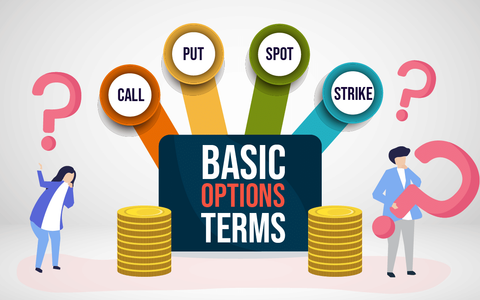
- The Spot Price is the current market price of the underlying asset, while the Strike Price is the price at which the option holder has the right to buy or sell.
- The Option Premium is the amount the option buyer pays to the seller to acquire the right to exercise their position.
An option gives buyers/sellers the right to buy or sell a given quantity of an underlying asset on the expiry date at a specified price. It is a derivative instrument and derives value from the price of the underlying security or stock.
The option buyer has the right to exercise his position and can choose whether to buy or not to buy. The option seller is under obligation to sell and does not have a choice to not sell at the end of the contract if the buyer demands.
Options contracts are always only available in lots, just like future contracts or Initial Public Offers.
Options are of two types: Call Option and Put Option. Both are described below.
Let us take the example of this option contract of TCS to describe further options terms.

1. Spot Price: The current market price of the underlying asset. The Spot Price in the above chart is Rs 3,090.65.
2. Strike Price: The price at which the option holder has the right to buy or sell the given quantities of the underlying asset at the expiry. It is the price at which the contract is made. The Strike Price in the above chart is Rs 3,100.
3. Call Option: It gives the buyer the right to buy a given quantity of an underlying asset on a pre-decided date at a pre-decided price. To obtain this position, the buyer has to pay the option premium to the seller/writer of the option.
In the Money (ITM) Call Options are those in which the spot price (current market price) is GREATER than the strike price.
Out of the Money (OTM) Call Options are those in which the spot price (current market price) is LESSER than the strike price.
4. Put Option: It gives the buyer of this option the right to sell a given quantity of an underlying asset on a pre-decided date at a pre-decided price.
In the Money (ITM) Put Options are those in which the spot price (current market price) is LESSER than the strike price.
Out of the Money (OTM) Put Options are those in which the spot price (current market price) is GREATER than the strike price.
When the spot price is the same as Strike Price, it is called At the Money (ATM) option, for both calls and puts.
5. Option Premium: It is the amount the option buyer has to pay to the option seller/writer. After paying this premium, the buyer acquires a right whether he wants to exercise his/her position on the expiry date.
If he chooses not to exercise his right, the option premium stays with the option seller/writer. Similarly, an option seller has to put his entire margin in front as well, so that he would not walk out of the deal if he faces losses. The Option Premium in the above chart is Rs 97. The buyer has to put forward only the premium amount of Rs 97 multiplied by lot size, while the seller will have to put forward a 1-1.5 lakhs margin regardless of the strike price/lot size and stock/index.
Frequently asked questions
What is an option?
An option gives buyers/sellers the right to buy or sell a given quantity of an underlying asset on the expiry date at a specified price.
What are the two types of options?
Options are of two types: Call Option and Put Option.
What is a Call Option?
A Call Option gives the buyer the right to buy a given quantity of an underlying asset on a pre-decided date at a pre-decided price.
What is a Put Option?
A Put Option gives the buyer of this option the right to sell a given quantity of an underlying asset on a pre-decided date at a pre-decided price.
Written by
marketfeed TeamRelated reads
What are Technical Indicators: Definitions and Types?
Understand technical indicators: what they are, how to plot them, their types (overlays, underlays, lagging, leading), and tips for effective use in trading.
What is Volume in the Stock Market? How to Analyse It?
What trading volume means, why it confirms or rejects a price trend, and how to apply volume analysis and the Volume Profile in real trades.

The BEST Framework to Create a Diversified Stock Portfolio
Learn the best framework to create a diversified stock portfolio for long-term success. Understand asset, market cap, and sectoral diversification for optimal returns.
Join 2.4M+ Indians · Free · 2 min