Editorial
The Impact of China's Port Shutdown on Global Trade
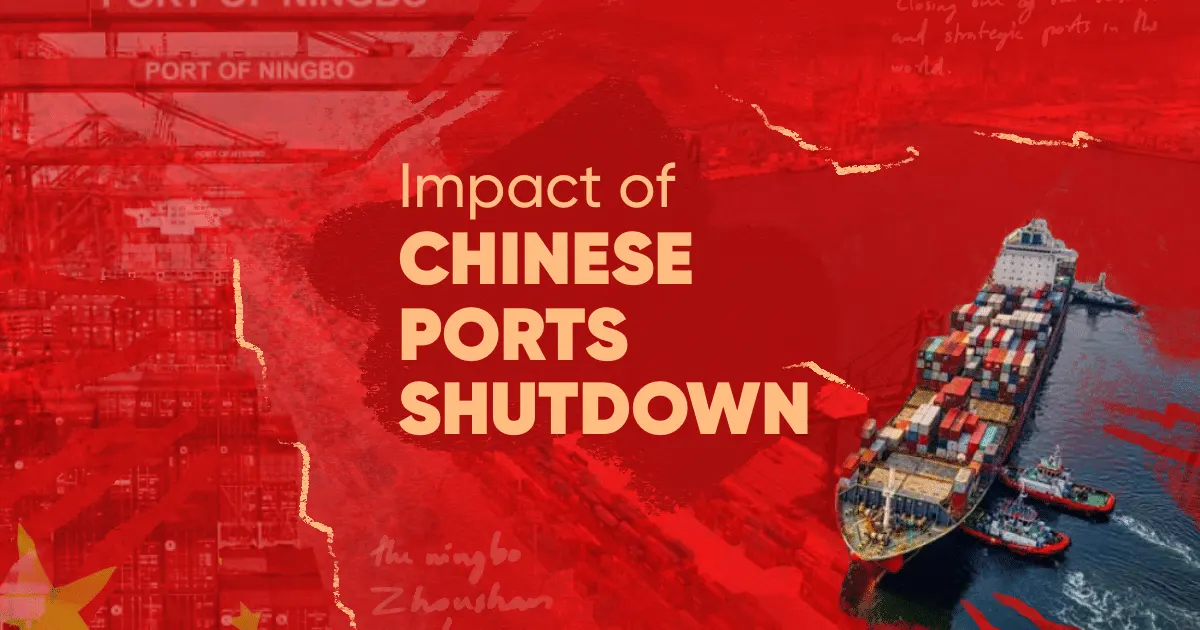
The Meishan Terminal at Ningbo-Zhoushan Port in China halted operations after a worker tested positive for Covid-19. This article discusses the potential impact of this partial shutdown on global trade.
Key takeaways
- The Meishan Terminal at Ningbo-Zhoushan Port in China halted operations after a worker tested positive for Covid-19.
- The Ningbo-Zhoushan Port is the third busiest in the world in terms of total container volume and plays a vital role in facilitating global trade.
- The shutdown of the Meishan Terminal could cause further stress on global supply chains, which are already weak due to the Covid-19 pandemic.
- Industry experts anticipate a backlog of consignments and increased average wait times, with shipping companies likely to pass on extra costs to consumers, potentially leading to a hike in global inflation.
Last week, the Meishan Terminal at Ningbo-Zhoushan Port in China halted its operations after a worker tested positive for Covid-19. It is one of the busiest and strategically located ports in the world. The Chinese port services vital shipments to Europe and North America. There have been rising global concerns over the consequences of this shutdown over the past few days.
In today’s article, we shall discuss the potential impact of the partial shutdown of China's Ningbo-Zhoushan Port on global trade.
The Ningbo-Zhoushan Port
The Ningbo-Zhoushan Port in China is the third busiest in the world in terms of total container volume. The port is located in Ningbo and Zhoushan in Zhejiang Province (south of Shanghai), on the coast of the East China Sea. It is part of the 21st Century Maritime Silk Route that connects China, the rest of Asia, Africa, and Europe. The port is primarily engaged in the economic trade of cargo shipment, raw materials, and manufactured goods. It services shipments from as far as North and South America and Oceania (Australia, New Zealand, Fiji, etc).
According to the World Shipping Council, the port handled 27.49 million twenty-foot equivalent units (TEUs) of container throughput in 2019. Container volume in 2020 rose nearly 5% year-on-year (YoY) to 28.72 million TEUs. [TEU is the standard measure for freight container volume]. During the first half of 2021, the Ningbo-Zhoushan Port handled the most cargo among all Chinese ports at 623 million tonnes.
Electronic goods, textiles, low and high-end manufactured goods are exported through Ningbo Port. Items imported via the port include crude oil, electronics, raw chemicals, and agricultural products. Thus, it is clear that Ningbo Port plays a vital role in facilitating global trade.
The Shutdown of Meishan Terminal
Last Wednesday (August 11), a 34-year-old employee at the Meishan Terminal of Ningbo-Zhoushan Port tested positive for coronavirus, despite receiving both doses of the Sinovac vaccine. He was asymptomatic. As per reports, the worker was infected with the highly contagious Delta strain. An epidemiological investigation (or contact tracing) revealed that the worker had come into close contact with sailors of foreign cargo ships. Chinese authorities immediately initiated a lockdown in the Meishan area, including the terminal and bonded warehouse.
According to reports, China has a zero-tolerance policy for Covid-19. One person testing positive was enough to shut down an entire port terminal. The country is witnessing a resurgence of Covid-19 cases. Chinese officials have enforced strict measures that prioritise pandemic mitigation over everything else. Over the past month, they have ordered mass testing in a few areas and imposed restrictions on movement across major cities.
Now, cargo ships that are headed to Meishan Terminal are being redirected to other terminals/ports in that area. Port authorities are actively negotiating with shipping companies and releasing information on a real-time data platform. Certain vessels docked at the Meishan Terminal before the shutdown have temporarily suspended cargo operations.
The Impact of the Shutdown
Over the past year, global supply chains have become extremely weak due to closures and lockdowns amidst the Covid-19 pandemic. The shortage of shipping containers and the crisis at the Suez Canal in March led to further disruptions in global trade. A surge in Covid-19 cases in June also triggered disruptions at certain shipping hubs in Southern China. There is a severe delay of shipments across the world, and freight charges have increased exponentially.
According to Freightos Baltic Global Container Freight Index, container shipping rates from China and East Asia to the west coast of North America have surged ~270% in 2021 to $15,800 per TEU. The manufacturing and logistics sectors are yet to recover from the initial impact of the Covid-19 pandemic. The global chip shortage has also been a result of the slowdown in maritime trade.
An extended shutdown of one of the largest port terminals in the world could cause further stress on supply chains. Despite the diversion of shipments, industry experts are anticipating a backlog of consignments, and average wait times are likely to increase. All major ports around the world are bracing for a sharp decline in cargo volumes. Shipping companies are likely to pass on the extra costs to consumers, which could lead to a further hike in global inflation.
Moreover, there are rising fears of outbreaks of the Delta variant of Covid-19 at key ports. With economies reopening and manufacturing activities growing to pre-Covid levels, the global shipping system will struggle to handle an unprecedented rise in demand.
Let us look forward to seeing how the situation unfolds in the days to come. Let us know your views on the topic in the comments section of the marketfeed app.
Frequently asked questions
Why did the Meishan Terminal at Ningbo-Zhoushan Port shut down?
The Meishan Terminal at Ningbo-Zhoushan Port shut down after a worker tested positive for Covid-19.
What is the Ningbo-Zhoushan Port's global ranking in container volume?
The Ningbo-Zhoushan Port is the third busiest in the world in terms of total container volume.
What types of goods are exported and imported through Ningbo Port?
Electronic goods, textiles, low and high-end manufactured goods are exported through Ningbo Port, while items imported via the port include crude oil, electronics, raw chemicals, and agricultural products.
Written by
Cherian VargheseRelated reads

Natural Gas Trading: A Beginner’s Guide
Learn the basics of natural gas trading, including liquidity, volatility, derivatives, capital requirements, and factors influencing prices, in this beginner's guide.

Union Budget 2025-26: Key Highlights and New Tax Slabs Explained
Explore key highlights of the Union Budget 2025-26, including new tax slabs, sector allocations for agriculture, healthcare, defense, and infrastructure.

A Simple Guide to Trading Gold and Silver on MCX
Learn to trade gold and silver on MCX with this guide. Understand contract types, capital requirements, and factors influencing prices for profitable trading.
Join 2.4M+ Indians · Free · 2 min