Editorial
The Hidden Danger in IPOs of 2021
The year 2021 saw a stream of Initial Public Offerings (IPOs) that entered many investors’ pockets. A closer look at the 2021 IPO bull run shows that companies might have tried to list without sufficient reason or cause.
Key takeaways
- A total of 72 companies had their IPOs in FY22, with 38 out of 52 mainboard IPOs ending up with listing gains between January and November.
- The IPO count for FY22 stood at 71, amounting to Rs 85,600 crores, as against Rs 27,200 crore raised by 56 companies last year.
- 26% of companies used IPO funds for corporate purposes, 19% for funding capital expenditure, another 19% for repayment of existing loans, and 11% for an offer for sale.
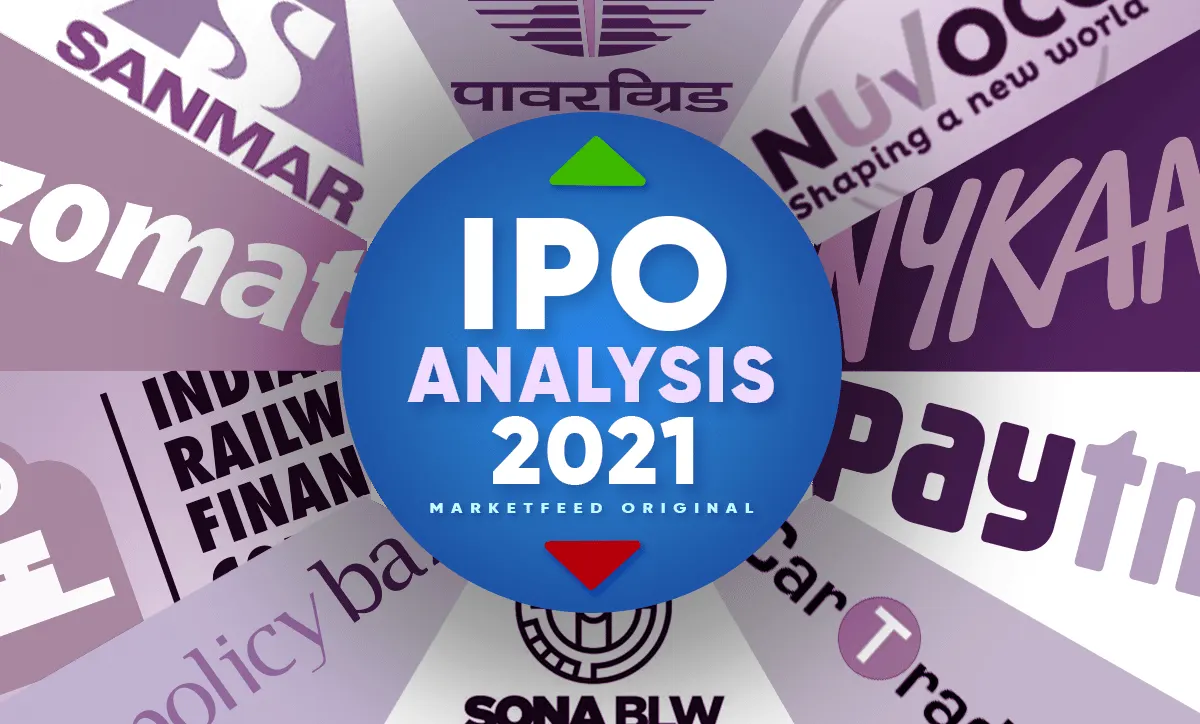
- New-age tech-oriented companies like Zomato, Nykaa, PayTM, and Policy Bazaar are leading the IPO bull run, often listing for brand recognition and premium value unlocking.
- The Reserve Bank of India has capped an individual borrower's limit for NBFCs to Rs 1 crore, which could significantly impact the subscription status of IPOs.
The year 2021 saw a stream of Initial Public Offerings (IPOs) that entered many investors’ pockets. Companies from all sectors and industries tried to unlock their true value by listing on the stock market. According to credit rating agency India Ratings and Research (Ind-Ra), the financial year 2022 has the highest number of IPOs lined up in over two decades. A closer look at the 2021 IPO bull run shows that companies might have tried to list without sufficient reason or cause. The question is, can the recent and upcoming IPOs sustain investor gains? Are the listed companies overpriced? Have the IPO-raised funds been used in the right manner? Read on to know more.
Are IPOs Overpriced?
A total of 72 companies had their IPOs in FY22. Between January and November, 38 out of 52 mainboard IPOs ended up with listing gains. Listing gains happen when a company’s share debuts at a higher price than what the IPO subscribers bought it for. Based on the issue size, the top 10 companies gave average listing gains of nearly ~17%.

According to Ind-Ra, the IPO count for FY22 stood at 71, amounting to Rs 85,600 crores as against Rs 27,200 crore raised by 56 companies last year. Life Insurance Corporation or LIC is planning to raise nearly Rs 1,00,000 crore through an IPO. If it happens by year-end, it could drive the total issue size for the fiscal to nearly Rs 2,00,000 crore. The IPO bull run is being led by the new-age tech-oriented companies like Zomato, Nykaa, PayTM, Policy Bazaar, to name a few. Unlike traditional companies, new-age tech-oriented companies are listing for brand recognition and premium value unlocking.

IPOs Not Helping In Cutting Down Corporate Debt?

According to Ind-Ra, 26% of the companies used the funds for corporate purposes, 19% used them for funding capital expenditure, another 19% used them for repayment of existing loans, and the remaining 11% used it to carry out an offer for sale.
There has been a shift in trend regarding objects of offer that a company mentions in Red Herring Prospectus (IPO Report). While the purpose of an IPO is generally considered to be either for funding capital expenditure or repaying existing debt, many companies have clearly stated ‘brand recognition’ as the sole reason.
The availability of cheap Commercial Paper (CP) has also fueled the IPO of Bullrun. CPs are borrowings made from NBFCs for short-term use (up to one year). IPO Investors, mostly institutional ones, would borrow from Non-Banking Financial Companies (NBFCs) to fuel their IPO gig. The Reserve Bank of India has now capped an individual borrowers limit for NBFCs to Rs 1 crore. This move could significantly impact the subscription status of the IPOs.
The Way Ahead
The bull run in 2021 was fuelled by the enormous liquidity offered by monetary and fiscal easing. Once the central banks start cutting interest rates, the money could make its way out of the recent IPO stocks, many of which are known to be overvalued.
Another cause of worry is the reason why certain companies got listed. Many have done so with the intent of getting a premium valuation from the hype caused by retail and institutional investors alike. If a company does not utilize the IPO funds correctly, it might face operational or financial bottlenecks in the future, which could be the reason for the investor's dissatisfaction. This dissatisfaction could drive down the valuation of the company. The upcoming quarter is crucial for the stock market. With fears regarding the Omicron variant of COVID-19, sensitive oil prices, and interest rate cut expectations, investors need to weigh their investments in light of these risks and make the right choices.
Frequently asked questions
How many companies had IPOs in FY22?
A total of 72 companies had their IPOs in FY22.
What were the average listing gains for the top 10 companies based on issue size?
Based on the issue size, the top 10 companies gave average listing gains of nearly ~17%.
How much did LIC plan to raise through an IPO?
Life Insurance Corporation or LIC is planning to raise nearly Rs 1,00,000 crore through an IPO.
How did companies use the funds raised from IPOs according to Ind-Ra?
According to Ind-Ra, 26% of the companies used the funds for corporate purposes, 19% used them for funding capital expenditure, another 19% used them for repayment of existing loans, and the remaining 11% used it to carry out an offer for sale.
Written by
Maarg VaidyaRelated reads

Natural Gas Trading: A Beginner’s Guide
Learn the basics of natural gas trading, including liquidity, volatility, derivatives, capital requirements, and factors influencing prices, in this beginner's guide.
Union Budget 2025-26: Key Highlights and New Tax Slabs Explained
Explore key highlights of the Union Budget 2025-26, including new tax slabs, sector allocations for agriculture, healthcare, defense, and infrastructure.

A Simple Guide to Trading Gold and Silver on MCX
Learn to trade gold and silver on MCX with this guide. Understand contract types, capital requirements, and factors influencing prices for profitable trading.
Join 2.4M+ Indians · Free · 2 min