Editorial
Inflation in India - What You Need to Know
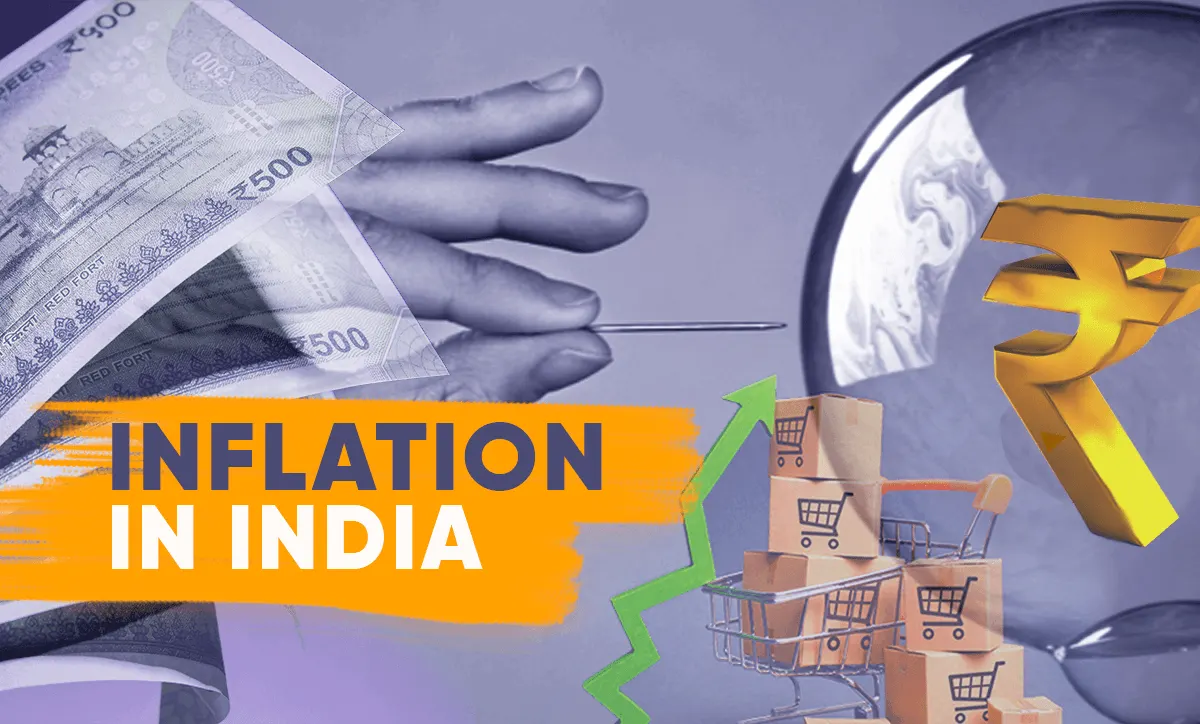
Inflation is the general increase in prices of goods and services that tends to reduce the purchasing power of money. This article explores inflation indicators like WPI and CPI, rising food prices, and government efforts to manage them.
Key takeaways
- Inflation is the general increase in prices of goods and services that tends to reduce the purchasing power of money.
- The two primary indicators for inflation in a country are the Wholesale Price Index (WPI) and the Consumer Price Index (CPI).
- WPI inflation impacts businesses and industries, whereas CPI inflation affects consumers.
- The WPI-CPI Divergence is a noticeable phenomenon where WPI inflation grows at a much higher rate than CPI inflation.
- Core CPI and Core WPI exclude food, fuel, and light, and show less divergence than the overall WPI and CPI.
Inflation is the general increase in prices of goods and services that tends to reduce the purchasing power of money. Thanks to inflation, a litre of petrol that cost Rs 25 in the year 2000 now costs more than Rs 100. Inflation has a noticeable impact on our lives. One can notice the effects of inflation especially after the consequent waves of the COVID-19 pandemic. Central Banks and Governments across the globe are trying to fight inflation without impacting the stock markets, currency, and the general population.
In this piece, we explore the inflation indicators, rising food prices, and how governments are trying to tame them.
Inflation Indicators: WPI, CPI, and More…
There are two primary indicators for inflation in a country. One is the Wholesale Price Index (WPI) and the other is Consumer Price Index (CPI). Each indicator is calculated by considering a specific basket of goods and services. Wholesale Price Index (WPI), as the name suggests, measures the change in the wholesale price of goods and services. These goods and services are traded in bulk. Then there is the Consumer Price Index (CPI), which measures retail price change for goods and services at the consumer level. WPI inflation impacts businesses and industries, whereas CPI inflation affects consumers.
Both CPI and WPI consist of a basket of goods and services with a certain weightage given to all. The weightage for both CPI and WPI is given below:


For WPI, ‘manufactured products’ are assigned the highest weightage, whereas for CPI, ‘food and beverages are assigned the highest weightage. A quick glance through the pie chart will tell that ‘manufactured products’ drive the WPI inflation, whereas ‘food and beverages’ drive the CPI inflation.
WPI-CPI Divergence
The WPI-CPI Divergence is a noticeable phenomenon that has occurred many times in the past. Generally, WPI and CPI inflation move together. It is evident from the figure given below that WPI and CPI inflation growth are diverging instead of moving together. While CPI inflation growth is moderate, WPI inflation is growing at a much higher rate.
The question is, why is WPI inflation growing at a fast pace but CPI inflation isn’t?

The WPI inflation spike is clearly because of an increase in the wholesale price of manufactured goods. As stated before, WPI is driven by businesses/industries and vice versa. After the Covid-19 pandemic imposed restrictions, businesses decided to recover and expand. As governments pumped money into the system to push businesses and industries towards recovery, the demand for raw materials started increasing. The increase in demand for wholesale raw materials pushed the WPI inflation upwards. The disruption in supply chains has further contributed to WPI inflation. If the WPI inflation isn’t curbed, the cost of procuring raw materials will increase for businesses. Eventually, these costs will be passed on to consumers, driving up CPI inflation.
Let us take a look at two new terms: Core CPI and Core WPI. Core CPI and Core WPI exclude food, fuel, and light. A closer look at the Core CPI and Core WPI shows that the two aren’t as divergent as shown earlier. This clearly proves that the WPI inflation is mainly driven by inflation in food, vegetables, and fuel prices. Production has resumed to pre-pandemic levels, but consumption is still below those levels.
While manufacturers continue to produce goods, there isn’t sufficient demand YET among consumers. Businesses have not yet started passing on the burden of inflation to consumers. However, one can still feel the tremors of it in retail prices. Telecom operators have hiked tariffs by 20-25%. Recreation and Amusement inflation has been the highest since 2012. Food inflation has been on the rise steadily since September 2021.
Central banks across the globe have started hiking interest rates. Most are following a contractionary monetary policy, meaning they have started taking money out of the economy. The central banks are doing so at a slow pace for a reason. If the tapering of liquidity impacts personal income, it could restrict consumers from spending, eventually stalling economic growth and also causing a considerable output gap. While businesses would have spent a lot on capacity building and increasing production, the demand for the same from the consumer side might not exist.
However, a question remains. Will the CPI converge to WPI or vice versa? It could happen, provided there is a surge in demand from the consumer side and planned expenditure from businesses. This would eventually normalise inflation levels and stimulate economic growth.
Frequently asked questions
What is inflation?
Inflation is the general increase in prices of goods and services that tends to reduce the purchasing power of money.
What are the primary indicators of inflation?
The two primary indicators for inflation in a country are the Wholesale Price Index (WPI) and the Consumer Price Index (CPI).
How does WPI inflation differ from CPI inflation?
WPI inflation impacts businesses and industries, whereas CPI inflation affects consumers.
What drives WPI inflation?
The WPI inflation spike is clearly because of an increase in the wholesale price of manufactured goods, driven by businesses/industries.
Written by
Maarg VaidyaRelated reads
Natural Gas Trading: A Beginner’s Guide
Learn the basics of natural gas trading, including liquidity, volatility, derivatives, capital requirements, and factors influencing prices, in this beginner's guide.
Union Budget 2025-26: Key Highlights and New Tax Slabs Explained
Explore key highlights of the Union Budget 2025-26, including new tax slabs, sector allocations for agriculture, healthcare, defense, and infrastructure.
A Simple Guide to Trading Gold and Silver on MCX
Learn to trade gold and silver on MCX with this guide. Understand contract types, capital requirements, and factors influencing prices for profitable trading.
Join 2.4M+ Indians · Free · 2 min