Editorial
Are Hydrogen-Powered Cars the Future?
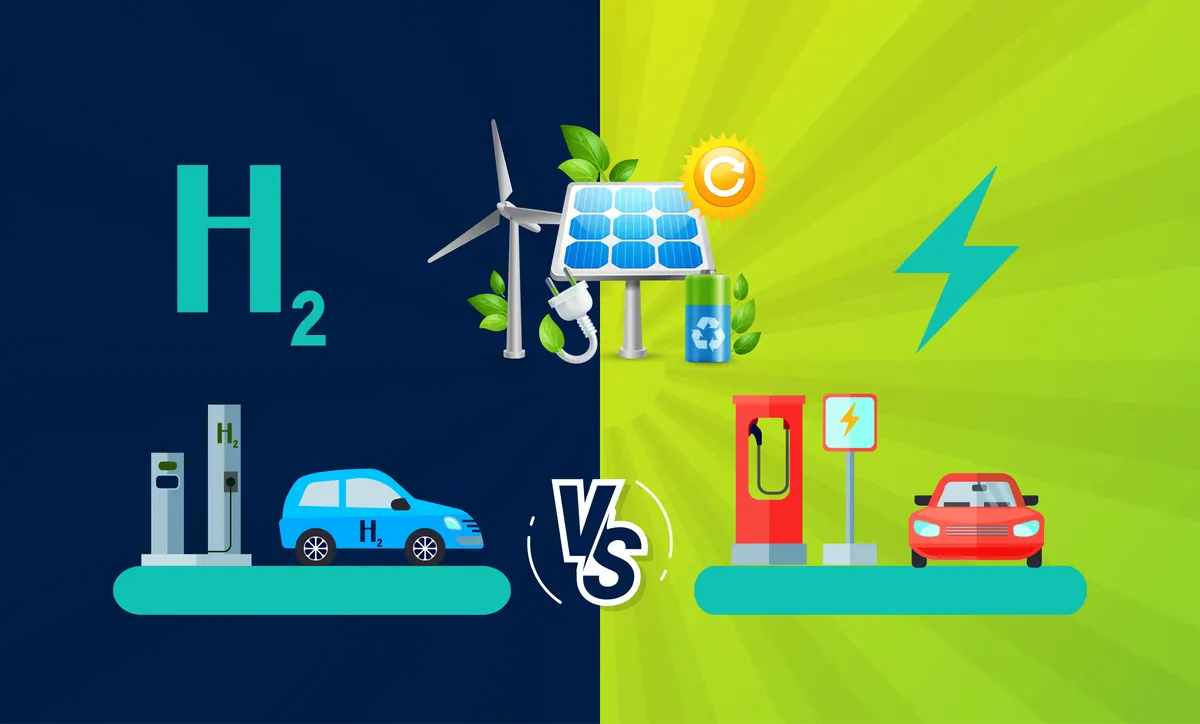
Countries worldwide are transitioning to green fuel vehicles, with hydrogen-powered cars emerging as a potential breakthrough. This article explores how hydrogen fuel cells work and their viability, particularly in India.
On this page
Key takeaways
- Hydrogen is an energy carrier that is converted into electricity by a fuel cell stack to power vehicles.
- Fuel cell electric vehicles (FCEVs) like Toyota Mirai, Honda Clarity, and Hyundai Nexo use hydrogen gas to power an on-board electric motor.
- FCEVs offer advantages such as better range, quick refueling times (around 5 minutes), and about five times better energy storage per unit volume and weight compared to battery-powered electric vehicles (BEVs).
- Challenges for FCEVs include the technology still being under development, limited commercial sales (only 25,000 globally by end of 2020), lack of fueling station infrastructure (less than 500 worldwide), and safety concerns regarding pressurised hydrogen.
- India has launched a National Hydrogen Energy Mission to develop hydrogen as an energy source, with pilot projects already underway in Delhi and Leh.
Countries around the world are making a conscious effort to transition from polluting combustible fuel-powered vehicles to electric vehicles (EVs) or those that run on various green fuels. India has also announced plans to de-carbonise within the next 30 years. Our country’s target of achieving 175 gigawatts (GW) of renewable energy capacity by 2022 has received a major boost through the provisions of the Union Budget 2021-22 as well.
People’s preferences are slowly changing, and we are witnessing a surge in EV sales globally. Automakers are also investing heavily towards the development of technology that allows cars to run on green fuels. Companies such as Toyota and Hyundai have developed vehicles that run on the most abundant element in the universe— Hydrogen. It is considered to be a breakthrough in the future of transportation (after EVs). Let us have an understanding of how hydrogen-powered cars work. Let us also find out if it will be a viable option for India.
Hydrogen as a Fuel: Features and Types
Hydrogen is the most common element in the universe. However, it only exists in the form of combinations with other elements. Hydrogen is commonly extracted from compounds such as water, and the extraction process can be quite energy-intensive. The sources and processes by which hydrogen is derived are categorised using colour tabs. Hydrogen produced from fossil fuels (primarily natural gas) is called grey hydrogen. Blue hydrogen is one that is generated from fossil fuels with carbon capture and storage options. Hydrogen generated from renewable power sources (solar, wind, geothermal) is called green hydrogen.
The concept of hydrogen-powered vehicles primarily revolves around the third method of deriving hydrogen. The main advantage of green hydrogen is that it is a clean-burning molecule. It can help reduce carbon emissions in sectors such as iron and steel, chemicals, and transportation.
How Do Hydrogen Fuel Cells Work?
Unlike solar or wind power, hydrogen is not a source of energy. It is an energy carrier. In order to power vehicles, a device known as fuel cell stack converts hydrogen fuel into electricity. A fuel cell converts chemical energy into electrical energy using oxidising agents through an oxidation-reduction reaction. Fuel cell-based vehicles combine hydrogen and oxygen to produce electricity to power the electric motor in vehicles. As they use electricity to run, we could say that hydrogen-powered vehicles are essentially electric vehicles (EVs).
This electric-chemical reaction is much more efficient or cleaner than combustion (burning petrol). Thus, cars or trucks that run with the help of hydrogen fuel cells have a near-zero carbon footprint.
Fuel cell electric vehicles (FCEVs) such as Toyota Mirai, Honda Clarity, and Hyundai Nexo use hydrogen gas to power an on-board electric motor. Interestingly, FCEVs have a much better range when compared to Tesla cars or other EV models. It only requires 5 minutes to refuel, unlike Teslas, which could take over an hour to fully recharge (depending on the trip). Also, FCEVs provide about five times better energy storage per unit volume and weight than battery-powered electric vehicles (BEVs). This means that such cars have more space for other features and can easily be used for long drives.
Challenges
The technology behind hydrogen-powered vehicles is still under development and is yet to be scaled-up. So far, Honda, Toyota, and Hyundai are the only automakers that are selling FCEVs commercially. At the same time, they are producing a very limited number of such cars. Only 25,000 hydrogen fuel cell vehicles were sold globally by the end of 2020. During the same period, the number of EVs sold was 8 million. A major challenge in the adoption of FCEVs is the lack of fuelling station infrastructure. There are less than 500 operational hydrogen stations in the world today. These stations are mostly found in Europe, Japan, and South Korea.
Another concern over hydrogen fuel cell vehicles is safety. Hydrogen is pressurised and stored in a cryogenic tank, which is a tank used to store materials at very low temperatures. The hydrogen is then fed to a lower-pressure cell and put through an electric-chemical reaction to generate electricity. There can be a risk of explosions due to these chemical reactions. However, Hyundai and Toyota have stated that the safety and reliability of hydrogen fuel tanks are similar to that of standard CNG engines.
India’s National Hydrogen Energy Mission
In the recent budget presentation, Finance Minister Nirmala Sitharaman launched a National Hydrogen Energy Mission, which will provide a road-map for using hydrogen as an energy source. The government has allocated Rs 1,500 crore towards the development of renewable energy sources. And, a significant amount out of this will be utilised for the Hydrogen Energy Mission. It would specifically focus on green hydrogen and how it can be used for increasing our country’s renewable energy capacity. This mission will provide a significant boost to the chemical, steel, and transportation industries.
Last year, Delhi became the first Indian city to operate buses running on hydrogen-blended compressed natural gas (H-CNG). H-CNG is a mix of 18% hydrogen in CNG. NTPC Limited is operating a pilot project to run 10 hydrogen fuel cell-based electric buses and fuel cell electric cars in Leh and Delhi. The power major is also considering setting up a green hydrogen production facility in Andhra Pradesh. Indian Oil Corporation (IOC) is planning to set up a dedicated unit to produce hydrogen to run buses at its research & development (R&D) centre in Faridabad, Haryana. Thus, we can see that India has already started tapping into the potential of hydrogen as an energy source. However, the fact remains that we must find a method to bring down the cost of producing or deriving green hydrogen.
Conclusion
Various industry experts have said that FCEVs are more likely to disrupt the automobile sector than battery-powered cars. This is because of major advantages such as very low refueling time, better range, and comparatively low prices. These factors pose a threat to electric vehicles (EVs) globally. Large automobile manufacturers such as Mercedes-Benz, GMC, and BMW (that have transitioned to developing EVs) have now created a separate team/segment dedicated to FCEVs.
In India, we would be able to see more hydrogen-powered vehicles plying on our roads in the near future. However, there is still a long way to go until this becomes a reality. The challenges faced by the launch of FCEVs have to be addressed in-depth. Automakers and government agencies must join forces to set up a vast network of hydrogen stations. This would encourage more companies to manufacture FCEVs at affordable prices. Most importantly, there must also be adequate measures to develop hydrogen fuel cell technology.
Let us look forward to seeing how India implements these ambitious goals to reduce overall carbon emissions to protect the environment.
Frequently asked questions
How do hydrogen fuel cells work?
A fuel cell converts chemical energy into electrical energy using oxidising agents through an oxidation-reduction reaction, combining hydrogen and oxygen to produce electricity to power an electric motor in vehicles.
What are the types of hydrogen?
Hydrogen produced from fossil fuels is called grey hydrogen, blue hydrogen is generated from fossil fuels with carbon capture and storage, and green hydrogen is generated from renewable power sources.
What are the advantages of hydrogen-powered cars?
Hydrogen-powered cars, or FCEVs, have a much better range, require only about 5 minutes to refuel, and provide about five times better energy storage per unit volume and weight than battery-powered electric vehicles.
What are the challenges for hydrogen-powered cars?
Challenges include the technology still being under development, limited commercial sales, a lack of fuelling station infrastructure, and safety concerns regarding the storage of pressurised hydrogen.
Written by
Cherian VargheseRelated reads

Natural Gas Trading: A Beginner’s Guide
Learn the basics of natural gas trading, including liquidity, volatility, derivatives, capital requirements, and factors influencing prices, in this beginner's guide.

Union Budget 2025-26: Key Highlights and New Tax Slabs Explained
Explore key highlights of the Union Budget 2025-26, including new tax slabs, sector allocations for agriculture, healthcare, defense, and infrastructure.

A Simple Guide to Trading Gold and Silver on MCX
Learn to trade gold and silver on MCX with this guide. Understand contract types, capital requirements, and factors influencing prices for profitable trading.
Join 2.4M+ Indians · Free · 2 min